
Furnace Repair Services: Restore Heat Fast. Done Right. Done Safe.
When your furnace stops working in Colorado, it's not just uncomfortable. It's urgent.
Even during a mild Colorado winter, a single cold night without heat becomes a serious problem, especially for families with young children, elderly family members, or pets. And when temperatures drop hard, which they do without warning on the Front Range, a broken furnace needs attention immediately.
Power Electrical, Heating & Cooling Services provides fast, professional furnace repair for homeowners across the Denver metro area. Our licensed HVAC technicians diagnose the actual problem accurately, explain it clearly in plain language, and repair it correctly so your heat comes back on and stays on.
If You Smell Gas Near Your Furnace: Stop Reading and Act Now in Acres Green
A gas smell near your furnace is a potential emergency.
Do not attempt to operate the furnace. Do not turn lights or switches on or off. Do not use your phone inside the home.
Do this immediately:
- Get everyone out of the home, including pets
- Leave the door open as you exit
- Do not use the garage door opener
- Once outside and safely away from the home, call 911 and Xcel Energy at 1-800-895-2999
- Do not re-enter the home until emergency responders have cleared it
After the gas company has cleared the home and identified the source, call us.
We diagnose and repair gas line issues at the furnace, valve, manifold, and gas connections correctly and to code.
Call or Text: (720) 272-2562
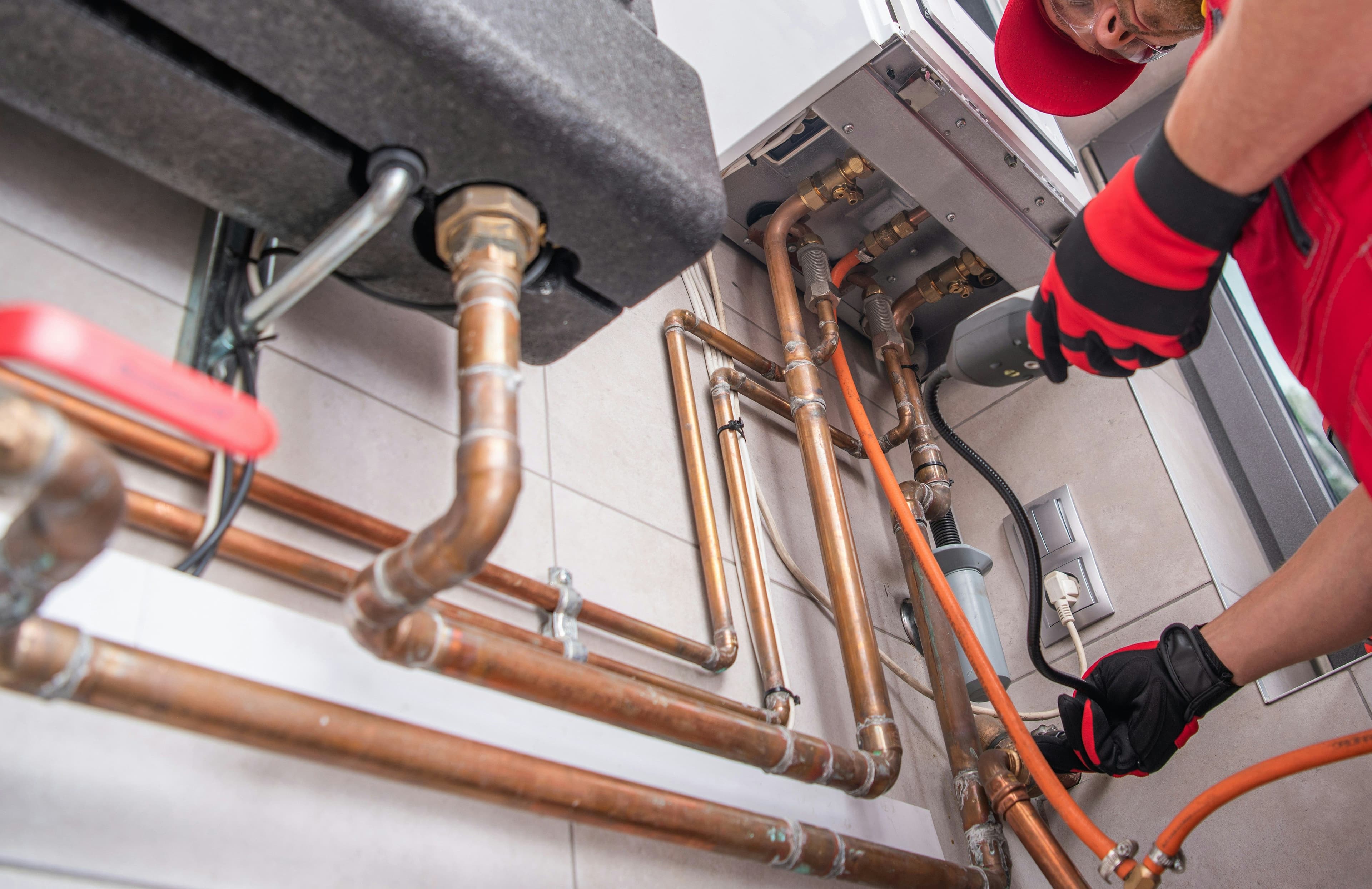
Same-day service available for urgent furnace failures.
Book Now
What Your Furnace Is Trying to Tell You
Understanding Furnace Error Codes and Blinking Lights
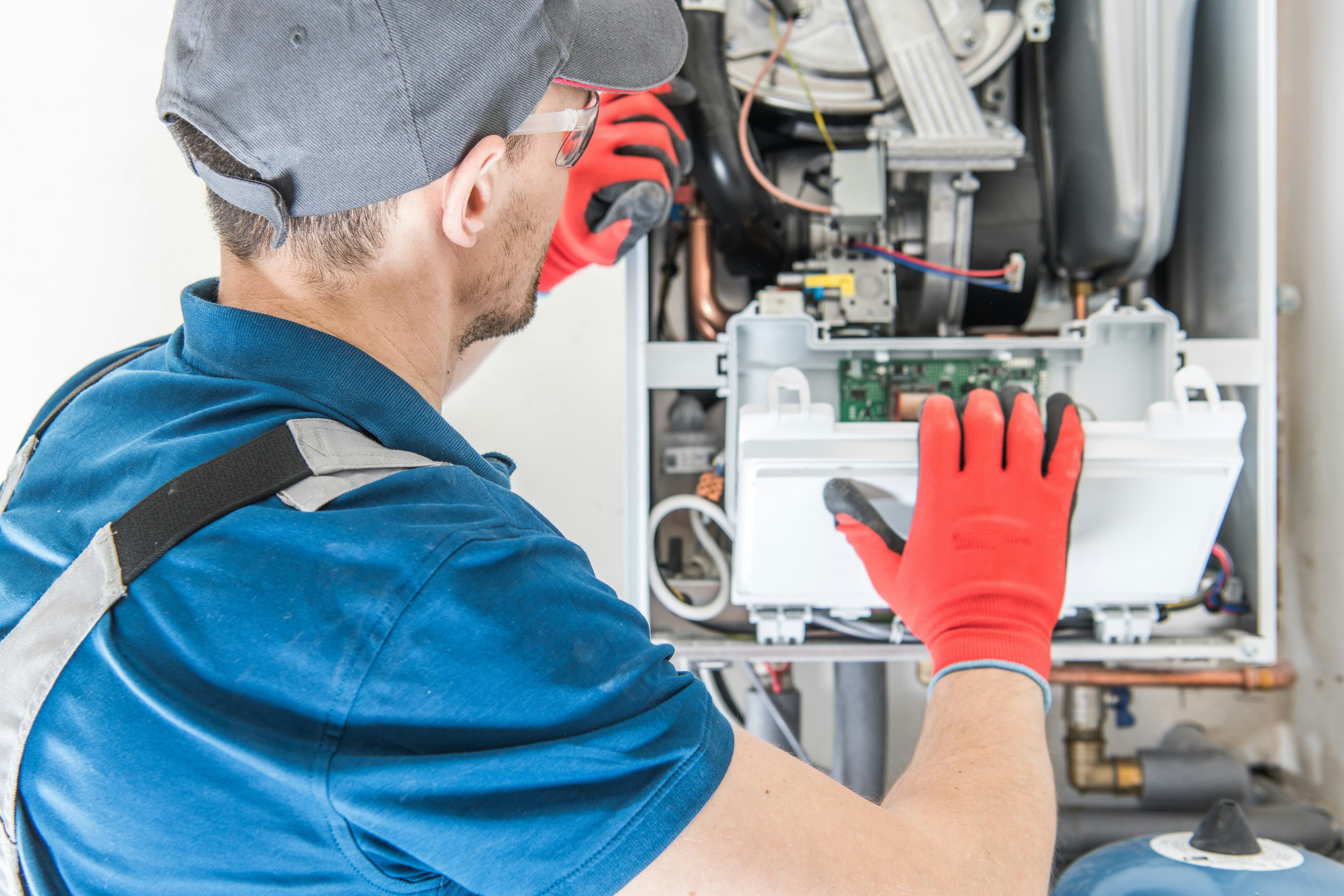
Most modern furnaces communicate problems using blinking LED lights on the control board, visible through the inspection window on the furnace access panel.
When your furnace isn't operating correctly, those lights are often telling you exactly what's wrong.
Here's how to read them:
Count the number of blinks in the repeating sequence, then check the fault code sticker inside your furnace access panel. That sticker explains what the blink pattern means for your specific furnace model.
Error codes are not universal. The same blink pattern means different things depending on the manufacturer, which is why your furnace's specific code chart matters.
Common fault categories across most systems:
• Pressure switch faults: Often caused by blocked condensate drains, cracked pressure switch hoses, or failing inducer motors
• Limit switch faults: Usually caused by dirty filters, blocked vents, or failing blower motors causing overheating
• Ignition faults: Commonly caused by failed igniters, dirty flame sensors, or gas supply problems
• Rollout switch faults: A serious safety issue indicating flames are leaving the burner area improperly
• Control board faults: Electrical communication or board failures causing inconsistent system behavior
• Lockout conditions: The furnace has failed startup multiple times and shut itself down as a safety measure
The most important thing to understand is this:
Resetting a furnace repeatedly without diagnosing the cause is a temporary fix at best and a safety risk at worst.
If your furnace is displaying error codes, call us. We diagnose the actual cause and repair the problem correctly, not just clear the code.
Call or Text: (720) 272-2562
Your Service Process
- Rapid emergency response within hours
- Comprehensive system diagnosis and assessment
- Transparent pricing with detailed explanations
- Expert repair using quality replacement parts
- Thorough testing and performance verification
- Professional cleanup and maintenance recommendations
- Follow up service to ensure continued operation
Common Furnace Problems We Fix
Sound Familiar? Here's What We Diagnose and Repair Every Day.
• Furnace won't turn on at all
• Furnace starts but shuts off before heating the home
• Furnace running but blowing cold or lukewarm air
• Home taking much longer than normal to reach set temperature
• Some rooms heating properly while others stay cold
• Furnace keeps turning on and off repeatedly
• Furnace runs constantly but can't keep up
• Furnace starts and immediately shuts down
• System locks out and won't restart
• Weak airflow from vents throughout the home
• No airflow even though the system appears to run
• Airflow present but air not warm enough
• Uneven heating between rooms or floors
• Loud banging or booming when the system starts
• Rattling or vibrating during operation
• High-pitched squealing or grinding
• Rumbling from the burner area
• Clicking that continues beyond normal startup
• Burning smell when the furnace first runs, normal at season startup but concerning if persistent
• Burning plastic or electrical smell indicating possible wiring or control board problems
• Sulfur or rotten egg smell indicating a potential gas leak
• Musty smells from vents indicating possible indoor air quality concerns
• Thermostat not communicating with the furnace
• Furnace not responding to thermostat calls
• Error codes or blinking lights on the control board
• Circuit breaker tripping when the furnace runs
• Furnace continuing to run when the thermostat is turned off
If your furnace isn't operating the way it should, don't wait. Colorado weather doesn't give much warning.
EXCELLENT
Based on 0 reviews
Financing Options
We offer financing options to help you get the job done. Please contact us for more information.
Service Plan Memberships
We offer financing options to help you get the job done. Please contact us for more information.
The Furnace Repair Services Professionals
Honest Answer: Here's How We Think About It.
This question matters more now than ever because of Colorado's new furnace regulations.
Repair is usually the right choice when:
• Your furnace is less than 10 years old
• The repair involves common components like igniters, flame sensors, or capacitors
• Repair costs remain well below replacement cost
• The system has otherwise been properly maintained
Replacement deserves serious consideration when:
• Your furnace is 15 years old or older and facing major failure
• The heat exchanger has cracked, creating a legitimate safety issue
• Repair costs approach or exceed 50% of replacement cost
• Multiple repairs have occurred within the last two to three years
• Your furnace would soon require replacement under Colorado's upcoming 97% AFUE standard anyway
The Colorado law factor
If your furnace is already aging toward replacement, repairing it now only to replace it after July 31, 2026 may actually cost more long term as the minimum AFUE standard rises again and compliant equipment pricing increases further.
We'll give you honest numbers on both options so you can make the best decision for your home and budget.
Learn more about our furnace installation services and Colorado's new furnace laws here.
We never push replacement simply to create a larger sale.
• We respond quickly, with same-day service available for urgent furnace failures
• We diagnose the actual problem accurately, including reading error codes correctly for your specific system
• We explain clearly what we found and what it takes to repair it
• We provide transparent upfront pricing before work begins
• We complete repairs correctly using quality replacement parts
• We fully test system operation before leaving, including safety verification and carbon monoxide testing
• We stand behind our work with a warranty
We don't guess. We diagnose first and repair right.
• Electrical + HVAC Under One Roof: Furnace failures often involve electrical components including breakers, wiring, capacitors, and control boards. We handle both trades during the same visit.
• Family-Owned & Operated: A local company that understands what it means to lose heat during a Colorado winter.
• Licensed & Insured: Licensed HVAC technicians on every repair call.
• Accurate Diagnosis First: We identify the real cause before recommending repairs.
• No Upselling: We repair what actually needs repairing and provide honest replacement guidance when appropriate.
• Transparent Pricing: You know the cost before work begins. No surprise invoices.
• 5.0-Star Rating With 202 Reviews: Our customers speak for themselves.
We restore heat fast, and we make sure it's safe.
1. Why is my furnace blowing cold air?
A furnace blowing cold air is one of the most common calls we receive.
Common causes include dirty flame sensors, overheating from restricted airflow, failed igniters, cracked heat exchangers, or incorrect thermostat settings.
Check your thermostat settings and filter first. If that doesn't resolve the issue, call us for accurate diagnosis.
2. Why does my furnace keep turning on and off?
Short cycling usually indicates overheating, flame sensing issues, airflow restrictions, condensate drainage problems, or pressure switch faults.
Repeated short cycling accelerates wear on your furnace and should be diagnosed promptly.
3. How do I know if my furnace needs repair or replacement?
System age, repair cost, maintenance history, and failure type all matter.
Systems under 10 years old with common component failures usually make sense to repair.
Older systems facing major repairs often deserve replacement consideration, especially under Colorado's new furnace regulations.
We provide honest numbers on both options.
4. Why won't my furnace turn on?
Start by checking thermostat settings, furnace power switches, and circuit breakers.
If those are correct, common causes include failed igniters, control board failures, gas supply problems, or safety switch lockouts.
Professional diagnosis is usually required.
5. Is it safe to run my furnace if it's making strange noises?
It depends on the noise.
Squealing often indicates motor bearing issues. Rattling may indicate loose panels or components. Loud booming during ignition can indicate delayed ignition, which should be addressed quickly.
Any unusual noise combined with burning smells or gas odors should be treated as urgent.
6. How much does furnace repair cost in Denver?
Repair costs depend entirely on the failed component and the overall condition of the system.
Common repairs like flame sensors and igniters are generally affordable. Larger repairs involving motors, control boards, or heat exchangers cost more.
We provide transparent upfront pricing after diagnosis.
Financing options are available for larger repairs.
7. What should I do if I smell gas near my furnace?
Leave the home immediately with everyone inside, including pets.
Do not touch switches, lights, or garage door openers.
Once safely outside, call 911 and Xcel Energy at 1-800-895-2999.
Do not re-enter the home until emergency responders say it is safe.
Then call us to diagnose and repair the source properly and safely.
Related Services
No Heat? Let's Get It Fixed Today.
Don't try to ride out a Colorado cold snap without heat.
Call us and we'll diagnose and repair your furnace fast.