
Circuit Breaker Repair & Replacement: Stop Breaker Trips. Restore Safe, Reliable Power.
If your breaker keeps tripping, it's not just annoying. It's your electrical system trying to protect your home.
A breaker that trips is doing its job. The important question is why it keeps happening.
An overloaded circuit, a failing breaker, damaged wiring, or an AFCI breaker detecting dangerous electrical arcing all create very different problems, and each one requires a different solution.
Power Electrical, Heating & Cooling Services diagnoses and resolves breaker issues for homeowners across the Denver metro area. We don't just reset breakers and leave. We identify the actual cause and fix it correctly so the problem doesn't keep returning.
Why Breakers Keep Tripping in Timnath
Your Breaker Is Telling You Something. Here's What It Might Mean.
Breakers trip for a reason, and understanding that reason matters.
These are the most common causes we diagnose throughout Denver metro homes:
• Overloaded circuit: Too many devices drawing power from one circuit, exceeding the breaker's rated capacity
• Short circuit: A hot wire touching a neutral wire creates a sudden surge that trips the breaker immediately
• Ground fault: A hot wire contacts a ground wire or grounded surface, often caused by damaged wiring or moisture
• Failing breaker: Breakers wear out over time and may trip under normal loads or fail to trip when they should
• Double-tapped breaker: Two wires connected to a breaker not designed for both, causing overload and nuisance tripping
• AFCI breaker activation: Arc fault breakers detect dangerous electrical arcing and trip to help prevent fires
• Wiring problems: Damaged, deteriorated, or improperly installed wiring behind walls can repeatedly trip breakers
• Panel issues: An aging or undersized panel struggling to support the home's electrical demand
Understanding the cause is what separates a real repair from a temporary reset.
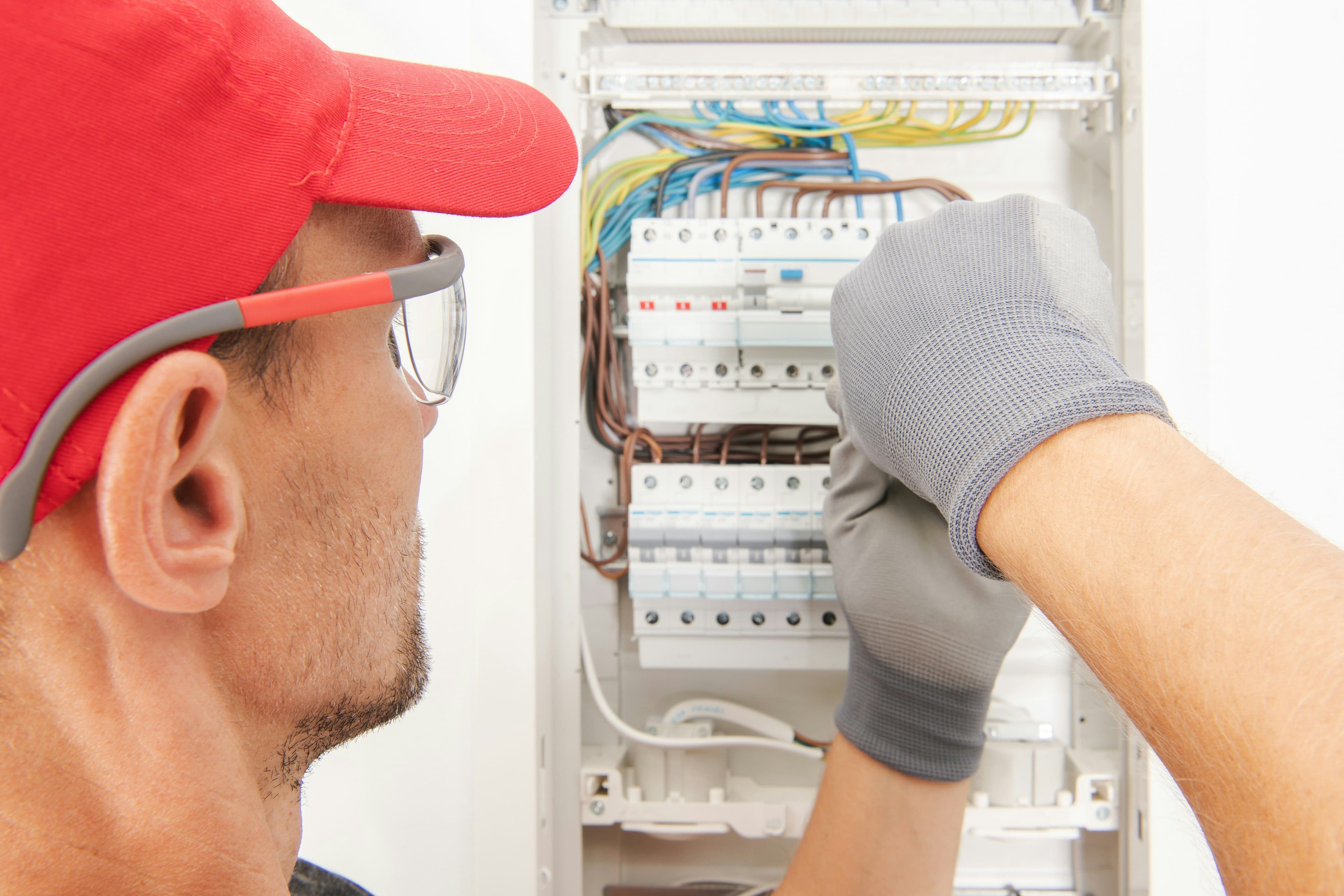
We find the cause and fix it the right way.
Book Now
Signs You Need Breaker Repair
Don't ignore these warning signs.
• Breaker trips repeatedly when using the same appliance
• Breaker trips and won't reset, or resets and immediately trips again
• Breaker feels warm or hot to the touch
• Burning smell near the electrical panel
• Visible scorching or discoloration around a breaker
• Breaker handle feels loose or won't stay firmly in the ON position
• Lights flicker or dim when appliances start up
• Partial power loss with some outlets working and others dead
• Multiple breakers tripping at the same time
• Buzzing, crackling, or humming sounds coming from the panel
If any of these apply, stop using the affected circuit and call us.
Call or Text: (720) 272-2562
Your Service Process
- Rapid emergency response within hours
- Comprehensive system diagnosis and assessment
- Transparent pricing with detailed explanations
- Expert repair using quality replacement parts
- Thorough testing and performance verification
- Professional cleanup and maintenance recommendations
- Follow up service to ensure continued operation
Why Breaker Problems Are Common in Denver Metro Homes
Older Homes: Worn Systems Meeting Modern Demand
A large portion of Denver metro homes were built between the 1950s and 1980s, when electrical demand looked very different than it does today.
Panels were smaller. Breakers handled lighter loads. Homes didn't contain EV chargers, multiple refrigerators, gaming systems, home offices, smart home devices, and modern HVAC systems all operating simultaneously.
Decades of cycling on and off, temperature swings, and increasing electrical demand wear breakers and panels down over time.
Colorado's climate accelerates the problem. Heating systems run heavily during winter. AC systems run hard during summer. That sustained load places constant stress on older electrical systems.
The result is nuisance tripping, overloaded circuits, worn breakers, and panels operating near or beyond their intended capacity.
If your home was built after the early 2000s and breakers seem to trip more often than expected, especially in bedrooms, living rooms, or finished spaces, there's a good chance you have AFCI breakers.
AFCI stands for Arc Fault Circuit Interrupter.
Unlike standard breakers that only respond to overloads and short circuits, AFCI breakers monitor the electrical signature of the circuit looking for dangerous electrical arcing.
Electrical arcing happens when electricity jumps through damaged wiring, deteriorated insulation, or loose electrical connections. It is one of the leading causes of residential electrical fires.
AFCI breakers were introduced into electrical code beginning in 2002 and are now required in most living spaces.
They trip more frequently because they are designed to detect problems a standard breaker would completely miss.
Common AFCI trip causes include:
• Damaged or aging appliance cords
• Loose outlet or switch connections
• Certain motor-driven appliances such as vacuums or power tools
• Wiring issues hidden behind walls
• Sensitive electronics with unusual electrical signatures
Sometimes it's a nuisance trip. Sometimes it's identifying a real safety issue.
The difference matters, and accurate diagnosis requires a licensed electrician.
If your AFCI breaker keeps tripping and you don't know why, call us. We'll identify the actual cause and explain it clearly.
Call or Text: (720) 272-2562
EXCELLENT
Based on 0 reviews
Financing Options
We offer financing options to help you get the job done. Please contact us for more information.
Service Plan Memberships
We offer financing options to help you get the job done. Please contact us for more information.
The Circuit Breaker Repair & Replacement Professionals
• Breaker diagnosis and circuit testing
• Single breaker repair and replacement
• AFCI breaker installation and troubleshooting
• GFCI breaker installation and replacement
• Double-tap breaker corrections
• Tandem breaker installation
• Breaker panel evaluation and load assessment
• Panel capacity analysis and upgrade recommendations when needed
• Emergency breaker service
Most breaker problems are resolved during the first visit.
• We inspect your panel and breaker condition thoroughly
• We identify the actual cause of the tripping, not just the symptom
• We test circuits and electrical load to confirm our diagnosis
• We repair or replace the faulty breaker using the proper replacement component
• We verify safe operation before leaving
No guessing. No temporary fixes.
• 20+ Years in the Trade: Real experience diagnosing breaker problems in Denver metro homes of every age and type
• Family-Owned & Operated: A local team that takes the time to explain what's actually happening in your home
• Licensed & Insured: All breaker work completed by licensed electricians
• Fast Accurate Diagnostics: We identify the real cause instead of repeatedly resetting the breaker
• Electrical + HVAC Under One Roof: One call handles more than just electrical issues
• No Upselling: If your breaker only needs replacement, we replace it without pushing unnecessary upgrades
• 5.0-Star Rating With 201 Reviews: Our customers speak for themselves
We don't just reset breakers. We fix the actual problem.
1. Why does my breaker keep tripping?
Repeated breaker trips usually indicate one of four things:
• An overloaded circuit
• A short circuit or ground fault
• A failing breaker
• An AFCI breaker detecting dangerous electrical arcing
The correct repair depends entirely on the cause.
Resetting the breaker without diagnosing why it tripped is a temporary fix at best and a safety risk at worst.
Our electricians diagnose the actual issue and repair it correctly.
2. How do I know if my breaker is bad or if it's something else?
A breaker that trips under normal loads, feels warm, won't reset properly, shows discoloration, or has a loose handle may be failing.
However, a bad breaker is often part of a larger problem involving overloaded circuits or wiring issues.
We always diagnose the full system before replacing components.
3. Can I replace a breaker myself?
Technically yes, but it is strongly discouraged unless you have professional electrical training.
Even with the main breaker turned off, energized service lugs inside the panel remain live and extremely dangerous.
Installing the wrong breaker type or size also creates serious fire and safety risks.
Breaker replacement is fast and relatively affordable for a licensed electrician, and the risk of DIY simply isn't worth it.
4. How long does breaker repair or replacement take?
Simple breaker replacement is often completed in under an hour.
More complex diagnosis involving hidden wiring problems, AFCI troubleshooting, or overloaded circuits may take longer depending on the issue.
Most breaker problems are resolved during a single visit.
5. What is an AFCI breaker and do I need one?
An AFCI breaker monitors circuits for dangerous electrical arcing caused by damaged wiring or loose electrical connections.
Standard breakers do not detect this type of fire hazard.
AFCI protection has been required in bedrooms since 2002 and now covers most living spaces under current code.
If your older home lacks AFCI protection in required locations, upgrading is a worthwhile safety improvement.
6. When does a tripping breaker mean I need a panel upgrade?
A single tripping breaker does not automatically mean you need a panel upgrade.
However, if multiple breakers trip regularly, the panel is full, the system struggles under normal demand, or the panel is an older unsafe brand such as Federal Pacific or Zinsco, an upgrade may be necessary.
We provide honest assessments based on your actual system condition.
Learn more about our Electrical Panel Upgrade & Replacement Services here.
7. Is a breaker that won't reset dangerous?
Yes.
A breaker that trips and refuses to reset is usually indicating an active fault on the circuit.
Do not continue forcing it back on.
The breaker is doing its job by protecting the system from overheating, damage, or fire.
Leave the breaker off and call a licensed electrician to diagnose the cause safely.
Related Services
Need Breaker Repair or Replacement? Let's Get It Fixed.
Don't keep resetting the same breaker hoping it stops tripping.
Find out what's actually causing the problem and get it repaired the right way.