
AC Repair Services: Fast, Reliable Cooling Restored When You Need It Most.
When your AC stops working in the middle of a Colorado summer, it's not just uncomfortable. It can be genuinely dangerous for vulnerable family members and pets. And when your system is running but not cooling, cycling on and off constantly, or leaking water inside your home, every hour you wait makes the problem worse.
Power Electrical, Heating & Cooling Services provides fast, professional AC repair for homeowners across the Denver metro area. Our licensed HVAC technicians diagnose the actual problem accurately, explain it clearly, and repair it correctly so your home gets cool again and stays that way.
Common AC Repairs We Perform in Aspen Park
These are the repairs our HVAC technicians perform most frequently throughout the Denver metro area.
• Capacitor replacement: One of the most common AC repairs. Weak capacitors cause startup problems or complete system failure.
• Contactor replacement: Worn contactors prevent startup or create inconsistent operation.
• Refrigerant recharge and leak repair: Low refrigerant reduces cooling performance and damages compressors if ignored.
• Condenser fan motor replacement: Failed fan motors cause overheating and outdoor unit shutdowns.
• Thermostat repair and replacement: Communication failures create many no-cooling calls.
• Condensate drain clearing and repair: Blocked drain lines cause water damage and system shutdowns.
• Electrical connection repair: Loose or corroded electrical connections create intermittent failures and safety concerns.
• Compressor diagnosis and evaluation: Honest repair-versus-replacement guidance when compressors begin failing.
• Control board diagnosis and replacement: Failed boards create symptoms that often appear unrelated.
• Refrigerant line repair: Damaged or poorly insulated refrigerant lines reduce system efficiency and performance.
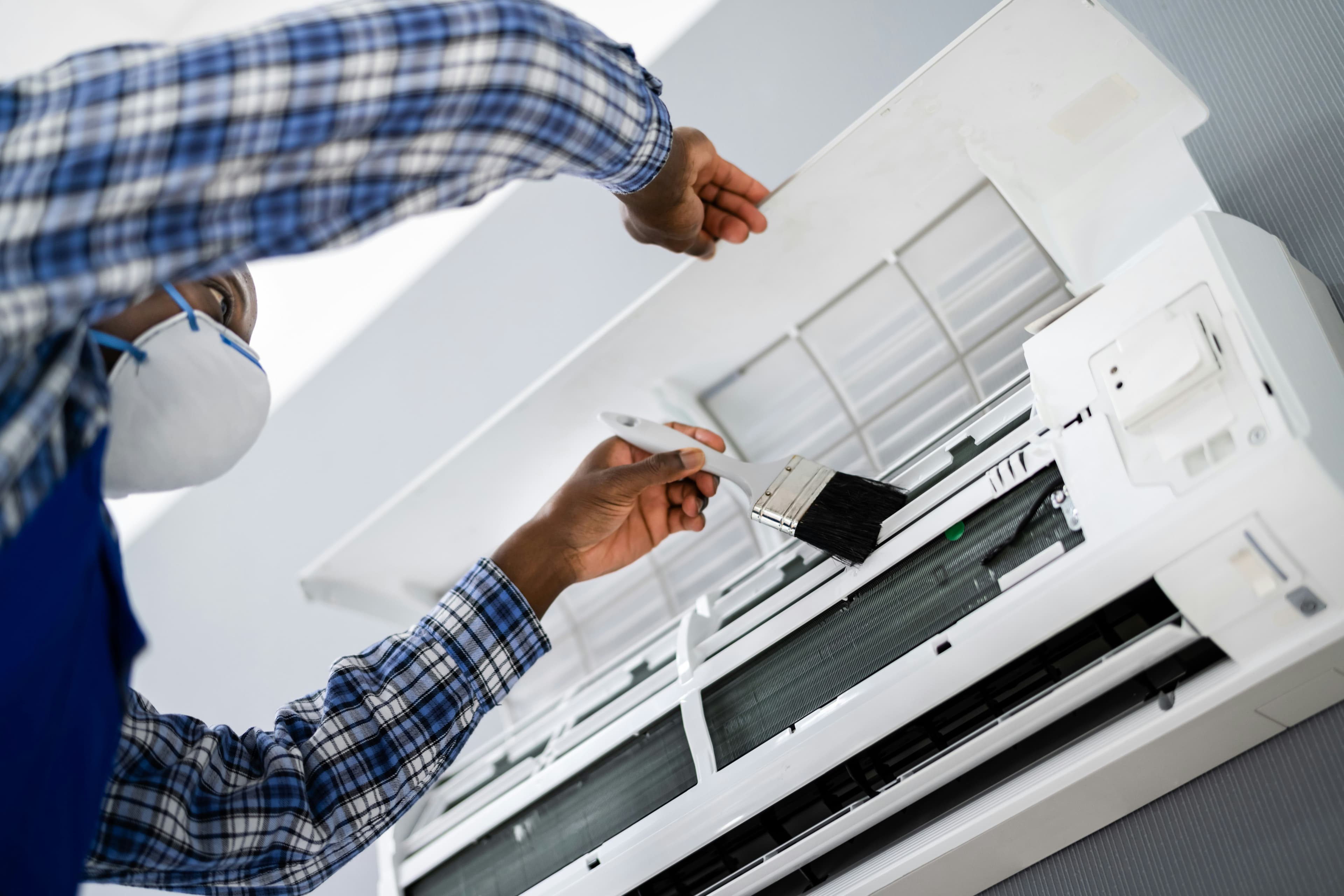
We don't guess. We don't replace parts hoping it fixes the problem. We diagnose first and repair right.
Book Now
Why AC Problems Are Common in Colorado
Colorado's climate creates unique stresses on AC systems that accelerate wear and increase repair frequency, especially on systems that haven't been maintained properly.
Altitude
Denver metro's elevation affects refrigerant pressures and compressor operation. Systems here work harder than systems at sea level, which increases wear on capacitors, contactors, and compressors.
Cottonwood Season
Every spring, Denver metro homes deal with heavy cottonwood buildup that packs into condenser coils and dramatically restricts airflow. Systems operating with restricted airflow overheat, lose efficiency, and wear out faster.
Summer Thunderstorms
Colorado's intense storm season brings lightning, power surges, and voltage fluctuations that damage capacitors, contactors, and control boards. Storm-related electrical failures are one of the most common summer AC repair calls we receive.
Rapid Temperature Swings
Colorado's dramatic swings between cold and hot temperatures place repeated mechanical stress on electrical connections, refrigerant line insulation, motors, and moving parts.
Deferred Maintenance
Many emergency AC repairs happen on systems that haven't received professional maintenance in years. Weak components identified during a spring tune-up cost far less than emergency breakdowns during peak summer heat.
Learn more about our AC maintenance services here.
Your Service Process
- Rapid emergency response within hours
- Comprehensive system diagnosis and assessment
- Transparent pricing with detailed explanations
- Expert repair using quality replacement parts
- Thorough testing and performance verification
- Professional cleanup and maintenance recommendations
- Follow up service to ensure continued operation
Common AC Problems We Fix
Sound Familiar? Here's What We Diagnose and Repair Every Day.
• AC running but not cooling the house
• System blowing warm or room temperature air
• House taking much longer than normal to cool down
• Uneven cooling, with some rooms cold and others warm
• AC struggling on hot days when it used to keep up easily
• AC won't turn on at all
• System starts then shuts off after a few minutes
• AC repeatedly turning on and off, short cycling
• System runs constantly but can't keep up
• AC trips the breaker when it starts
• Weak airflow from vents throughout the home
• No airflow from specific vents
• Airflow feels normal but air isn't cold enough
• Ice buildup on refrigerant lines or indoor coil
• Water leaking from the indoor air handler
• Water pooling around the indoor unit
• Condensate drain backing up or overflowing
• Excessive humidity inside the home despite AC operation
• Loud banging or clanking during startup
• Rattling or vibrating from the outdoor unit
• High-pitched squealing or grinding sounds
• Burning smells during operation
• Musty or moldy odors from vents
• Thermostat not communicating with the system
• AC not responding to thermostat commands
• System repeatedly tripping the breaker
• Electrical burning smell near the disconnect or outdoor unit
If something feels off with your AC, it usually is. Don't wait.
EXCELLENT
Based on 0 reviews
Financing Options
We offer financing options to help you get the job done. Please contact us for more information.
Service Plan Memberships
We offer financing options to help you get the job done. Please contact us for more information.
The AC Repair Services Professionals
Honest Answer: It Depends, and We'll Tell You the Truth Either Way.
This is one of the most important questions homeowners face during a major AC breakdown.
Repair is usually the right choice when:
• Your system is less than 10 years old and otherwise in good condition
• The repair involves common serviceable components such as capacitors, contactors, or fan motors
• Repair costs remain well below replacement cost
• The system has been professionally maintained and still operates efficiently
• You are not planning to sell your home soon
Replacement deserves serious consideration when:
• Your system is 15 years old or older and facing major failure
• The compressor has failed, often the most expensive AC repair
• Repair costs exceed 50% of replacement cost
• Your system still uses R-22 refrigerant, which is no longer manufactured and increasingly expensive
• Energy bills continue rising despite normal usage
• Multiple repairs have occurred within the last few years
We never push replacement simply to sell a larger project.
If repair makes financial sense, we'll tell you honestly and repair the system correctly. If replacement makes more sense long term, we'll explain exactly why.
Our goal is to give you accurate information, not pressure.
• We respond quickly, with same-day service available for urgent cooling failures
• We diagnose the actual problem before recommending repairs
• We explain clearly what we found and what it takes to fix it
• We provide transparent upfront pricing before work begins
• We complete repairs correctly using quality replacement parts
• We test the complete system before leaving to confirm proper operation
• We stand behind our work with a warranty
We don't guess. We diagnose first and repair right.
• Electrical + HVAC Under One Roof: If your AC issue involves breakers, disconnects, wiring, surge damage, or electrical failures, we handle both trades during the same visit.
• Family-Owned & Operated: A local team genuinely committed to restoring your comfort quickly.
• Licensed & Insured: Licensed HVAC technicians on every repair call.
• Accurate Diagnosis First: We identify the actual problem before recommending repairs.
• No Upselling: We repair what actually needs repair and provide honest recommendations.
• Transparent Pricing: You know the cost before work begins. No surprise invoices.
• 5.0-Star Rating With 201 Reviews: Our customers speak for themselves.
We repair it correctly so you aren't calling again next month for the same issue.
1. Why is my AC running but not cooling?
This is the most common summer AC problem we diagnose.
Common causes include low refrigerant from a leak, dirty condenser coils restricting heat rejection, failing capacitors weakening compressor performance, frozen evaporator coils, or thermostat communication problems.
Some issues are also electrical, including disconnect or wiring failures that allow partial system operation.
The symptom may look simple, but the cause often isn't. Accurate diagnosis matters.
2. How do I know if my AC needs repair or replacement?
System age, repair cost, refrigerant type, and maintenance history all matter.
Systems under 10 years old with common component failures almost always make sense to repair.
Older systems facing compressor failure or major refrigerant problems often make stronger financial sense to replace, especially if they still use R-22 refrigerant.
We provide honest numbers on both options.
3. How much does AC repair cost in Denver?
Repair cost depends entirely on the failed component and system condition.
Capacitors and contactors are generally affordable repairs. Fan motors, refrigerant leak repairs, and control boards are mid-range repairs. Compressor replacement and major refrigerant system repairs are typically the most expensive.
We provide transparent upfront estimates after diagnosis.
Financing options are available for larger repairs.
4. Why is my AC leaking water inside my house?
Most indoor water leaks come from clogged condensate drain lines.
Your AC removes moisture from indoor air during cooling. That water drains through a condensate line. When algae, sludge, or debris blocks the drain, water overflows into the home.
Frozen evaporator coils can also create excessive water during thawing.
We clear drains, repair drain systems, and identify the root cause.
5. Why does my AC keep turning on and off?
Short cycling has several possible causes.
Common issues include refrigerant leaks, failing capacitors, overheating compressors, dirty air filters, airflow restrictions, thermostat problems, or improperly sized systems.
Short cycling creates additional compressor wear and should be diagnosed quickly.
6. Can I run my AC if it's not cooling properly?
Usually not.
Systems operating with low refrigerant, frozen coils, or overheating compressors often suffer additional damage the longer they continue running.
If your AC is running but not cooling correctly, shutting it off and scheduling diagnosis is usually the safest option.
The main exception is a dirty air filter. Replacing the filter may resolve the issue if airflow restriction is the only problem.
7. How long does AC repair usually take?
Most common repairs are completed in one visit.
Capacitors, contactors, drain clearing, and thermostat replacement typically take one to two hours. More complex repairs involving refrigerant leaks, fan motors, or control boards may require additional time depending on system complexity and parts availability.
We provide realistic timelines after diagnosis.
Related Services
AC Not Working? Let's Get It Fixed Today.
Don't try to survive a Colorado summer without reliable cooling.
Call us and we'll diagnose and repair your AC system fast.